

The Black Stone at the Kaaba: Symbol of Faith and History
Introduction
Located at the Kaaba’s southeast corner in Makkah, the Black Stone is one of Islam’s most revered relics. Every year, millions of pilgrims performing Umrah and Hajj seek to follow the Prophet’s Sunnah by touching, kissing, or gesturing toward it during Tawaf.
Origins and Description
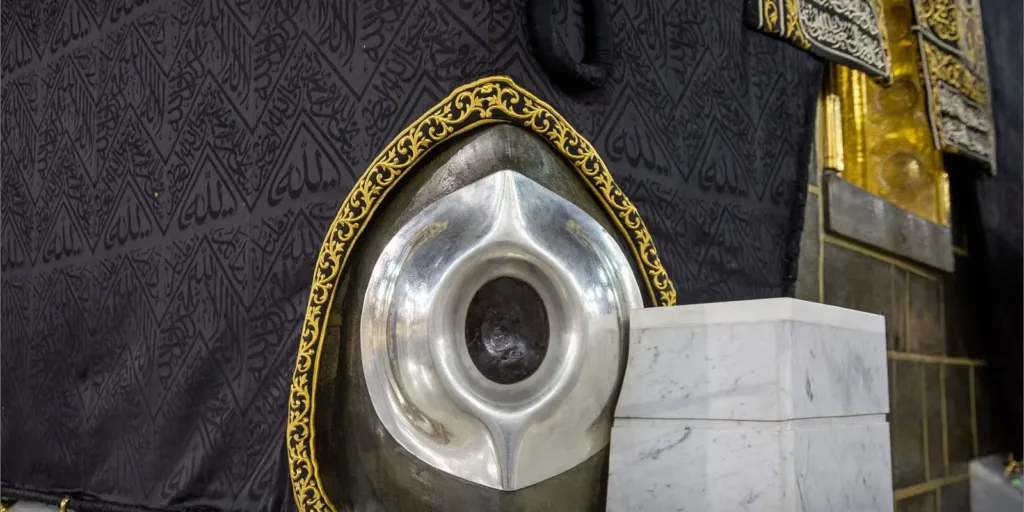
This sacred relic is a dark stone encased in a silver frame. Islamic tradition says it was sent from paradise and placed by Prophet Ibrahim during the Kaaba’s reconstruction. Once pure white, it darkened over time, symbolizing the sins of humanity.
Historical Significance
Centuries of Islamic history surround this holy object. Before his prophethood, Prophet Muhammad resolved a dispute among the Quraysh tribes regarding its placement. Later, it endured damage and theft but was restored, maintaining its place as a lasting part of Islamic heritage.
Its Role in Tawaf
Tawaf begins and ends at this stone. Pilgrims kiss or touch it when possible, while others gesture toward it as a sign of respect. This practice emphasizes faith and obedience, reminding believers to worship Allah alone.
Appearance Today
Today, the stone consists of small fragments secured in a silver frame. Its smooth, polished surface is the result of centuries of devotion from countless pilgrims.
Spiritual Meaning
Beyond its physical form, it symbolizes humility, devotion, and connection to divine tradition. For believers, it serves as a tangible link to the practices of Prophet Muhammad and the legacy of earlier Prophets.
Conclusion
The Black Stone is both a historical treasure and a spiritual symbol. Through Tawaf, pilgrims connect deeply with their faith and renew their sense of devotion.
With NoussukiTravel, you can experience this profound moment in Makkah with guidance and peace of mind.
📞 For more information about Umrah or Hajj, contact us at: Phone Number: +1 514 963 2792


